
Getting a facelift can be exciting. You’re going to have a more youthful, vibrant, bright, contoured look to your face. Not only are you now looking ten years younger, but you know you’ll be able to enjoy the results for years to come.
It’s important to note, however, that a facelift doesn’t stop time altogether. While you’ll look younger for years after your procedure, you’ll still continue to age.
The good news is that there are several things you can do to prolong your facelift results and postpone the time when you might need to consider a second procedure.
You know you are in the hands of an outstanding plastic surgeon who’s extremely well trained and experienced. But you’re probably curious about what to expect during the recovery and what you can do to get the best results in the future and in the shortest amount of time.
To get the most out of your facelift, make your recovery faster, and prolong the benefits, keep reading!
Prepare for After Your Surgery
While you will arrange for some help around the house in the initial day or two of your recovery, your additional preparation before the day of your surgery should include:
Stock up with healthy groceries:
- Ready-made meals you can simply reheat.
- Food that is high in protein and low in sodium.
- A good supply of healthy produce as a high-fiber diet will help with constipation caused by some pain medications.
- Soft foods that are easier to chew in the first week.
Get clothing ready:
- Make sure you have several days of comfortable clothing on hand.
- Choose sweatshirts or shirts that open at the front so you can avoid pulling clothing over your head.
Prepare your resting space:
- Think about where you are going to initially be spending most of your time.
- Invest in a recliner so that you can keep your head elevated to reduce swelling.
- For your bed, make sure you have several firm pillows to keep your head elevated well above your body.
Essential items to keep nearby:
- Phone with charger.
- Medications, lotions, and ointments.
- Books and magazines.
- Remote control for the TV.
- Laptop fitted with a comfortable stand.
After Facial Cosmetic Surgery
Minimize Swelling and Bleeding
Unfortunately, the swelling and bruising that follow a facelift tend to get worse before the healing begins. To ease the discomfort, try these remedies:
- Reduce the swelling and bruising with a cold compress.
- Ice around the surgical area to help reduce discoloration.
Take Care of Your Sutures
Wash your suture lines gently twice a day with baby shampoo.
Cleanse and Moisturize
Once the bandages have been removed, gently wash your incisions with soap and water three times a day, using a mild antibacterial cleanser to prevent bacteria build-up.
Your surgeon may have also provided an antibiotic ointment. Follow his advice on how best to use it.
Be sure to moisturize to reduce scarring, making sure your skin and the incisions never feel dry.
Go Easy on the Makeup
You might need to wait two or three weeks for the bruising and swelling to have subsided and be sure you have no open wounds before applying any makeup.
Eat a Healthy Diet
Focus on eating fresh whole foods cooked at home. Omega-3 fatty acids, like those found in fatty fish, can reduce inflammation and are an excellent source of Vitamin E. Not only can they help keep skin supple and moisturized, but the zinc also found in fatty fish can aid in healing.
Protein is essential for scar recovery, and the best options are lean meats, fish, and beans.
Make sure you drink enough water.
Go Easy on the Exercise
Wait for at least two weeks after your surgery before starting any strenuous activity and start slowly.
Avoid straining or lifting as this can lead to bleeding and excessive scar formation.
Skip the Sun
Not only does the sun damage the skin in general, but vulnerable incision lines and scars are even more at risk. Wear a hat and use a strong 30+ SPF sunscreen even on days you don’t plan to be outdoors.
Avoid Smoking
Starting to smoke again after your facelift can speed up the aging process and shorten the duration of your results. Smoking interferes with healing and how your face will look after surgery.
Make Skincare a Priority
It’s essential to continue with your skincare routine after your facelift since keeping your skin exfoliated and moisturized will help keep it looking youthful for longer.
Touch-Up Your Results with Injectables
Routine treatments with cosmetic injectables are a part of many facelift patients’ post-op regimens and help them to extend the life of their facelift results. Botox and dermal fillers can fill in lines and wrinkles that form on the skin over the years after a facelift.
How To Get the Best Results – Summary
Following post-operative instructions, using sunscreen regularly, and living a healthy lifestyle is essential for your plastic surgery outcomes and for your overall well-being.
Dr. David Kim and Dr. Eugene Kim at Beverly Hills Plastic Surgery have developed an impeccable reputation for producing stunning cosmetic surgery results. Contact our practice today at (310) 746-5475 or send an online request to schedule a consultation.

If you’ve committed to losing weight this year, that’s great!
We recommend a slow and steady approach of shifting to healthier foods that you enjoy, in smaller portions, paired with a regular and sustainable routine of increased physical activity. The combination of fewer calories in and more calories burned, accomplished by adopting a set of habits that become second nature to you, can be the key to losing weight and keeping it off. Beyond that, it’s all about what works for you.
But have you thought about what you’ll do after you lose the weight?
Body Contouring
If you’re lucky, your weight will come off in all the right places and you’ll be delighted with your slimmer body contours. But weight loss doesn’t always work that way. Many people are left with stubborn pockets of fat that are resistant to diet and exercise. Those might be around your waist, on your arms or thighs, or under your chin. Wherever the last bulges of fat persist, there are ways to get rid of them without going to extremes in dieting or at the gym.
Once you’re close to your weight goal — within about 10 or 15 pounds of your ideal weight — you might think about a body-contouring procedure to put the finishing touches on your self-improvement efforts. These procedures reduce unwanted pockets of fat on specific areas of your body in ways that eliminate those fat cells forever. They aren’t weight-loss treatments, but they make great complements to weight loss through healthy eating and exercise.
- CoolSculpting eliminates pinchable areas of excess fat by chilling it to low temperatures. The cooling damages the fat cells while the skin, muscle, and connective tissue are unaffected. In the weeks following treatment, the damaged fat cells are naturally processed out of your body for a long-lasting slimming effect.
- Liposuction uses small incisions to extract unwanted bulges of fat through a suction tube, or cannula. Once the excess fat is removed, that part of your body will have fewer fat cells permanently. Liposuction can remove fat from many parts of the body, including the abdomen, hips, thighs, upper arms, and chin.
- A tummy tuck goes even further in flattening and toning your midsection. The surgery removes excess skin that may sag and droop after weight loss. The procedure can also tighten and reconnect abdominal muscles to restore a firm, flat belly.
Breast Surgery
Weight loss can sometimes affect a woman’s breasts in ways that are less than desirable. Stretched breast skin can sag when the fat is gone, or your breasts can lose more volume than you would prefer.
- A breast lift corrects sagging breasts by removing excess skin and reshaping the breast to a rounder, more uplifted, and younger-looking form.
- Breast augmentation uses implants or fat transfer to increase breast volume, shape, and projection.
Mommy Makeover
A mommy makeover combines procedures—typically a tummy tuck, breast surgery, and liposuction—to restore a more attractive, younger-looking figure. A mommy makeover can provide the finishing transformation after successful weight loss to give you the body you want.
Facial Rejuvenation
As you get your body in beautiful shape, you might consider treatments to make your face look younger, too. You have many options for facial rejuvenation, including:
- Facial fillers to soften lines and wrinkles, add volume to hollowed areas, or plump your lips
- Botox to smooth lines and creases caused by repeated facial expressions
- A facelift to correct loose, saggy skin, eliminate facial wrinkles, get rid of jowls, and restore a well-defined jawline
Learn More About Body Contouring and Other Rejuvenating Treatments in Beverly Hills
Find out more about the possibilities of cosmetic treatment in a personal consultation. Dr. David Kim and Dr. Eugene Kim at Beverly Hills Plastic Surgery have developed an impeccable reputation for stunning, natural-looking cosmetic treatment and plastic surgery results, attracting patients from all over the world. Contact our practice today at (310) 746-5475 or send an online request to schedule an appointment.

Facelift techniques have advanced dramatically in recent years to produce subtle and natural-looking results. A facelift can reverse signs of aging like jowls, sagging skin in the midface, and deep creases below the eyes and at the corners of the mouth. The results are a smoother, younger-looking face with a more defined jawline. Many patients also choose to combine their facelift with another procedure.
By combining plastic surgery procedures, you can achieve your ideal look faster and with a single recovery period. A skilled and experienced plastic surgeon can combine procedures to give you a naturally younger and fresher appearance, as well as bring your facial features into better harmony.
Here are a few recommended procedures that can greatly complement your facelift results.
Brow Lift
A facelift corrects the effects of aging in the middle and lower part of the face — below your eyes. A brow lift, or forehead lift, restores a younger look to the upper part of the face. It subtly raises droopy eyebrows for a more alert look. It also smooths the lines and furrows on the forehead and between the eyebrows that can make a person appear angry, sad, or tired.
By combining a facelift with a brow lift, you’ll get a more complete refresh of your face without additional recovery time. You’ll look younger, more relaxed, and more alert.
Eyelid Surgery
The other upper-face procedure that is commonly combined with a facelift is eyelid surgery. The same aging process that causes the skin on the lower face and around the jaws to stretch and sag can cause the eyelids to droop, giving you a sleepy and prematurely aged appearance.
Upper eyelid surgery can make the eyes appear brighter, younger, and more attentive, and can remove fatty deposits from the lids that make them heavy and difficult to raise fully. Lower eyelid surgery lifts drooping lower lids and reduces the puffy appearance caused by fat buildup below the eyes.
Combining a facelift with eyelid surgery shifts the focus of your face from loose, hanging skin around your jawline to brighter, more beautiful, and alert eyes.
Nose Surgery or Rhinoplasty
Nose surgery or rhinoplasty can also be performed in combination with a facelift. As the central feature of the face, the nose defines your appearance in important ways. Nose surgery can change the size or shape of the nose in many ways and is a highly customized procedure. It can change the shape of the tip of your nose, modify the bridge of your nose, narrow the span between your nostrils, and even change the angle between the nose and the upper lip.
Rhinoplasty can be performed to make subtle changes that keep your nose in harmony with your rejuvenated face after a facelift. Or it can be done to make more significant changes to your nose to bring it into better balance with your other facial features.
Learn More in a Personal Consultation
For any cosmetic procedure, it’s essential to choose a plastic surgeon with extensive experience in the operations you’re considering. That’s especially true with facial procedures, which require particularly precise technique, and for combined procedures.
Dr. David Kim and Dr. Eugene Kim at Beverly Hills Plastic Surgery have developed an impeccable reputation for stunning, natural-looking cosmetic treatment and plastic surgery results, attracting patients from all over the world. Contact our practice today at (310) 746-5475 or send an online request to schedule a consultation.

Facelift surgery has been around for more than 100 years, and with each generation, the results have grown subtler and more natural-looking. The “windswept” look of facelifts past has fallen out of favor, replaced by today’s naturally youthful look — done with such artistry that friends and family members who aren’t in the know often can’t tell what gives your face that new sparkle.
Early Facelifts
Medical historians believe surgeons developed and performed the first facelift between 1901 and 1906, though records are incomplete. From what we can tell, these early facelifts were simple skin excisions: A doctor removed a strip of skin at the edge of the face and pulled the remaining skin tighter to reduce sagging and wrinkles. Advances in reconstructive surgery during World War I pushed the procedure a few steps forward. Facelift surgeons in the 1920s separated the skin from the underlying layer of fat before tightening it, preserving facial volume, and giving somewhat better results. Doctors also refined the placement of incisions to make scarring less visible.
Improvements in the 1960s, ‘70s, and ‘80s
The next significant improvements in facelift surgery came in the 1960s and ‘70s when pioneering surgeons began to sculpt the facial tissue below the skin as part of the procedure. At first, in the 1960s, they modified the volume of the fat just beneath the skin. Over time, they began to go deeper, until, by the late 1970s, some began to work on the superficial musculoaponeurotic system (SMAS), which includes the muscles and connective tissue that cover the bones of the face. This milestone marked the first significant change in facelift surgery in 70 years.
By the 1980s, the most advanced plastic surgeons were approaching facelifts from the inside out — lifting and reshaping the underlying facial muscles to provide a younger-looking structure for the smoothed skin on the surface. They also introduced new methods to reshape fat and tighten skin along the jawline for a more complete effect.
This shift to include the underlying SMAS in facelift surgery marked a distinct turning point in facelift results. Skin-only facelifts had required extra tautness, and the stretched results were sometimes all too obvious. Reshaping the foundational musculature of the face required surgeons to remove less skin to provide lift and remove wrinkles. So the results were both more natural-looking and longer-lasting.
Today’s Deep Plane and Volumetric Facelifts
The best plastic surgeons today still resculpt the underlying SMAS as part of a full facelift procedure. They also go even deeper to release the SMAS from the ligaments below them and elevate the facial tissue by resuspending it slightly higher on the face. This “deep-plane” technique gives a naturally younger look to the face, restoring contours that have fallen with age.
Today’s plastic surgeons have other techniques in their toolkits, too, to add volume to areas of the face that have started to sag or become hollow and gaunt-looking. It’s a natural effect of aging to lose volume in our cheeks, for example, or under our eyes. The fullness and softness of our younger faces tend to thin and drift down as we grow older. So the plump cheeks we had at age 18 can become drooping jowls or a hanging chin in our 50s. Today, a facelift can correct these volume changes by including fat transplants or dermal fillers.
The best surgeons now customize your facelift by combining the latest surgical techniques with volumetric procedures to produce subtly beautiful results. And with advances to minimize incisions, reduce bruising, and promote faster recovery, you’ll be able to show off your results without as much downtime.
Learn How Today’s Facelift Can Make You Look Years Younger
Dr. David Kim at Beverly Hills Plastic Surgery has developed an impeccable reputation for stunning, natural-looking facelift results. Contact our practice today at (310) 746-5475 or send an online request to schedule a consultation.
When it comes to appearing youthful and rejuvenated, modern plastic surgeons have a variety of options to give you the results you’re looking for. Cosmetic procedures are becoming more and  more mainstream in America, offering numerous anti-aging solutions to millions of people every year.
From dermal fillers and Botox to surgical facelifts, you have more options than ever to achieve a younger, natural-looking appearance. Many patients start with fillers, as they’re cost-effective and non-invasive. But how sustainable are fillers in the long term, and at what point should you consider transitioning to a facelift?
The Limitations of Dermal Fillers
For many patients, fillers are perfect for what they’re looking for. Botox can smooth out forehead furrows, and fillers like Juvéderm and Restylane can give your cheeks and lips a little more volume. For sagging jowls and excess loose skin, though, these treatments can’t do the trick.
A facelift can help you achieve a younger look without the need for touch-up appointments, as dermal fillers and cosmetic injectables require. Furthermore, a facelift can provide dramatic results with just one procedure, while the results obtained with fillers and injectables must be maintained with additional injections.
Long-Term Costs
Fillers can quickly and easily enhance appearance, but the effects aren’t permanent. While the timeline varies between brands and is affected by the patient’s facial anatomy, most treatments can be expected to last anywhere from nine to eighteen months.
It can be intimidating to consider a permanent surgical option, and fillers are more affordable and much less invasive. But over time, the cost of maintaining them adds up. At a certain point, it’s worth asking if it’s more financially viable to opt for a one-time surgery rather than to continuously pay for touch-up injections with cosmetic injectables.
A More Permanent Solution
The goal of a facelift is to tighten excess skin, smooth out sagging, and eliminate jowls to give you a more naturally youthful appearance. The procedure can also help address losses in facial volume, though it’s not uncommon to use fillers in conjunction with surgery to enhance the results.
The most attractive aspect of facelifts is its longevity. While the lifespan of fillers can be counted in months, the results of surgery can last up to 15 years.
When is the Right Time to Transition?
Unfortunately, there’s no one-size-fits-all answer to this question. The solution depends on several variables, including your unique aging characteristics and personal aesthetic goals. Technically, the only requirement for a facelift is that you are in good health, but it is ultimately a decision you should make with the guidance of a qualified plastic surgeon.
While fillers are popular with younger patients and are appropriate for all ages, the effects of aging become more difficult to treat as time goes on. This is especially true of the lower third of the face as time and gravity take their toll.
Is it time to consider surgical options to enhance your appearance? Contact our office today to schedule a consultation with our surgeon and find out what’s best for you.
See All Facelift Surgery Before and After Photos
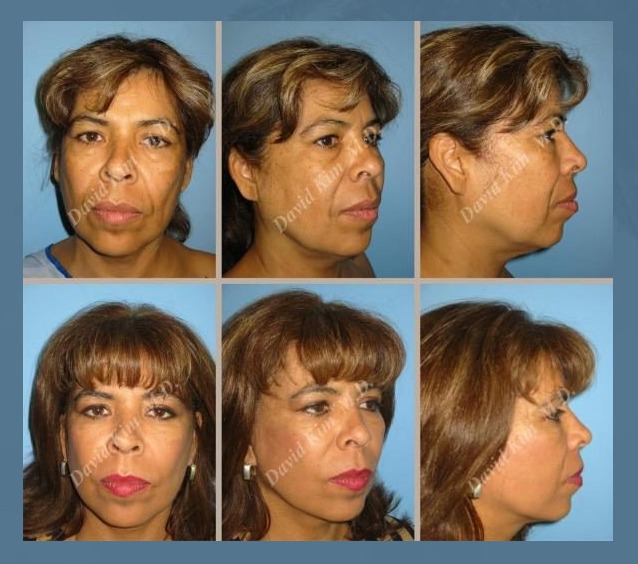
Today, facelift surgery (rhytidectomy) is one of the most popular plastic surgery procedures in the US. The surgeon will inform the patient on various aspects of a facelift and may also display facelift before and after images during the pre-op consultation.
The primary objective of a dedicated surgeon will be to enable the patient to make a well-considered choice about the facelift surgery. plastic surgeon Dr. David Kim provides facelift surgery to patients in Beverly Hills, Los Angeles, and surrounding locations.
What are Facelift Before and After Pictures?
Facelift ‘before and after’ pictures are a pair or groups of images of past patients who have received rhytidectomy with optimal results. These pictures are taken before as well as after the cosmetic surgery when the post-op swelling and bruising has subsided, and the final outcomes are fully established.
The surgeon will acquire these pictures with the patient’s express consent and display these images to new patients in a discreet and judicious manner.
According to standard norms, the surgeon will not reveal the patient’s identity. The sole objective behind showcasing these images is to help the prospective patient develop clarity of the facelift surgery outcomes.
Benefits
The face is the most prominent area of the body, and patients are rightly concerned about any procedure impacting the face. The surgeon can display facelift before and after images to reassure a new patient on whether a facelift is a suitable procedure for them.
Specific patients may only require limited facial correction such as a mini facelift while others may need a full facelift in combination with procedures for the upper face or a neck lift. Regardless of the scenario, a new patient can make a more appropriate choice after seeing facelift before and after photos.
What is amazing is digital technology and Internet capabilities. It would be derelict to write on this topic without mentioned these two stellar facets. There is not too many industries in this world that have not embraced this technology and the plastic surgery industry is certainly one of them.
Now people can see poignant pictures without making one phone call. Dr. Kim’s profound website allows people to grasp the situation without anyone else knowing. If that is not transparency nothing is.
Combining Pictures with Text
New patients may find it beneficial if facelift before and after images are accompanied by descriptive text explain the surgery, the reasons for which it was performed, and how it catered to the patient’s unique requirements.
The surgeon can effectively elucidate a previous patient’s journey through these descriptions. Descriptive text can be an integral part of before and after image galleries allowing patients to connect with the pictures while the text helps them remember the details more precisely.
Sharing Your Images
Surgeons can disseminate facelift before and after images to raise awareness on the procedure in the following ways:
- Website Galleries: Developing a before and after gallery on the practice website.
- Portfolios: Create a photo portfolio to show to prospective patients interested in the same procedure.
- Blog Posts: Adding images to a blog post is an effective way to offer new patients visual documentation of the procedure results.
- Social Media Sites: Images can effectively optimize social media posts. But it is important to be discretionary while posting on public forums.
A well-developed before and after image gallery can be an educational and promotional tool for the surgeon and their practice. The surgeon can use these images to display their skills and expertise while offering prospective patients information on complex procedures such as rhytidectomy. This is certainly the case of Dr. Kim.
Now patients can see these fantastic images from anywhere. It does not matter of the potential patient is at their work place on their smart phone or sitting on their favorite living room chair. They can be pondering this situation without even their closest friends or relatives even knowing. That is privacy and comfort that should be respected.
Committed cosmetic surgeon Dr. David Kim receives patients from Beverly Hills, Los Angeles, and other cities and towns in this region of California for facelift surgery.
For more information on the surgical and non-surgical procedures and treatments by Cosmetic Plastic Surgeons Dr. David Kim and Dr. Eugene Kim. Click here to contact us today.
Serving Beverly Hills, Los Angeles, West Hollywood, Orange County, Southern California and surrounding areas.
For individuals who want to avoid plastic surgery and yet achieve facial rejuvenation, a wide range of advanced and effective non-surgical facelift treatments are available today.
plastic surgeon Dr. David Kim provides cutting-edge surgical and non-surgical facelift options to patients in Beverly Hills, Los Angeles, and neighboring locations.
Anti-Wrinkle Facials and Chemical Peels
Anti-wrinkle facials, chemical peels and cleansing solutions can be an initial course of treatment for people with mild signs of facial aging. Certain people want to avoid dramatic facial changes while others require only a maintenance treatment to delay the onset of signs of aging on the face.
Anti-wrinkle facials and chemical peels can be a simple yet effective solution for men and women who want to avoid receiving facial plastic surgery. The cosmetic surgeon can assess the patient’s skin type and the state of sagging skin and recommend a suitable facial or chemical peel procedure.
Botox Injections
FDA-cleared Botox is a sought-after nonsurgical facelift treatment that mitigates the appearance of facial lines and wrinkles. Patients seeking to reduce the appearance of signs of aging non-surgically can consider Botox as an effective alternative.
The treatment generates quick outcomes and does not involve any downtime. In fact, Botox can delay the further development of wrinkles in some cases.
Dermal Fillers
Young and firm skin comprises high amounts of collagen and molecules known as Hyaluronic Acid (HA). Upon aging, various factors such as smoking and sun damage will adversely impact the ability of the skin to produce these molecules.
This causes the skin to sag and appear thinner. The dermal filler plumps the area of the HA loss and adds fullness to it. The filler is slowly metabolized and disintegrated by the body which promotes the production of natural collagen in the skin.
Today, various fillers are available to patients. Each dermal filler addresses essentially the same issue. However, some are more effective in certain areas compared to others. Furthermore, some filler treatments have higher longevity than others do.
RF Skin Tightening
RF skin tightening is based on radio frequency energy and helps mitigate aging signs in a nonsurgical manner. RF energy produces heat which is delivered directly into the deeper skin layers prompting the production of collagen.
New collagen production enables sagging facial skin to become tauter from within. RF is safe even for the rejuvenation of eyelids. In addition, RF skin tightening is also effective on the jowls, forehead, jawline, and underneath the chin.
Laser Skin Tightening
Laser skin tightening is an effective and popular nonsurgical solution for candidates who are considering an alternative to cosmetic surgery. This procedure can mitigate lines and wrinkles on the face, tone up muscles in the neck and face, elevate the jawline, and rejuvenate the skin surrounding the eyebrows and in the cheek area to offer a natural facelift.
Most patients may have to undergo two to three treatment sessions to attain optimal outcomes. Experienced cosmetic surgeon Dr. David Kim receives patients from Beverly Hills, Los Angeles, and nearby areas for non-surgical facelift.
For more information on the surgical and non-surgical procedures and treatments by Cosmetic Plastic Surgeons Dr. David Kim and Dr. Eugene Kim. Click here to contact us today.
Serving Beverly Hills, Los Angeles, West Hollywood, Orange County, Southern California and surrounding areas.
Facelift Plastic Surgery Beverly Hills
 One of the most common procedures done today, facelifts, are still being done as much if not more than ever before. Facelifts, or rhytidectomy, are meant to give the face a more youthful appearance by removing any excess skin on the face and tightening the underlying tissues. It’s important to remember that the effects of a facelift aren’t permanent and therefore shouldn’t be thought of as such. The reason that a facelift isn’t permanent is because the face will continue to age as time goes on, but having a facelift done is a long-lasting solution to appearing younger.
Ideal Facelift Candidates
- Sagging in the midface
- Deep creases along the nose and/or corner of the mouth or below the eyelids
- Any fat that has fallen or displaced
- Loose skin under the chin or jaw
- Loss of muscle tone in the lower jaw
Any of these reasons can be good for thinking about having a facelift done. Having a facelift done is a simple procedure that will have you feeling and looking good for a long time after. Although recovery usually takes two to three weeks to feel to return to normal it may take up to 6 months for incision lines to mature. Using cold compress on your face when you return home from surgery will help with swelling and bruising. Your face will be wrapped in a bandage as well in order to minimize these after effects as well.
If you are considering having a facelift done, please talk to a plastic surgeon about what to expect for results and what you can hope to achieve with your personal rhytidectomy
For more information on the surgical and non-surgical procedures and treatments by Cosmetic Plastic Surgeons Dr. David Kim and Dr. Eugene Kim, contact us (310) 271-6996 or click here.
Serving Beverly Hills, Los Angeles, West Hollywood, Orange County, Southern California and surrounding areas.